If you are heading to Baku and want to try a real Azerbaijani lunch, get ready for a food adventure. This is not a quick bite between sights. It is a whole ritual: a pile of fresh herbs and vegetables, steaming flatbread, golden saffron plov, tiny dumplings in fragrant broth and a small glass of strong tea at the end. Below, we explain what is served at an Azerbaijani lunch, how it is eaten and where in Baku to find the taste of a home-cooked meal.
What is an Azerbaijani lunch?
For many Azerbaijanis, lunch is an important part of the day and a reason to sit down together with family, friends or colleagues. It usually falls between noon and 3 p.m. Lunch in Baku turns into a small celebration full of flavors, aromas and conversation. People here take their time: it is not only about eating, but about enjoying every dish and every minute.
The order is almost always the same: fresh starters and bread, then a hot course (soup, plov, dolma or kebab), and finally tea with sweets. Azerbaijani cuisine relies on seasonal produce, plenty of herbs, lamb, beef, rice, dried fruit, nuts and spices such as saffron, sumac, dried mint and coriander. The heat is gentle: the food is aromatic and filling, not fiery.
Starters: how lunch begins
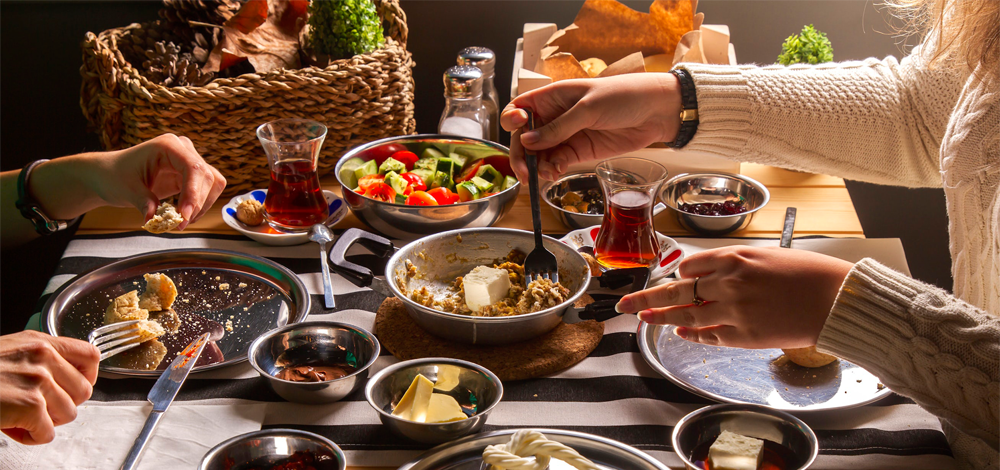
A traditional lunch opens with a variety of starters. The table is set with fresh seasonal vegetables (ripe tomatoes, crisp cucumbers, radishes), bunches of herbs (cilantro, basil, tarragon, mint, green onions), pickles and bread. The bread varies: thin lavash, hot tandir bread, golden flatbreads made to old recipes. Sour yogurt (gatyq) with garlic and herbs refreshes the palate after the heavier main course.
Qutab almost always appears: thin half-moons of unleavened dough filled with herbs, meat or pumpkin and fried on a dry pan. They are eaten by hand, often with a pinch of sumac and yogurt. Among meat-and-vegetable dishes you may also meet duzlama.
For a foreign visitor, starters are the best way to get to know the natural flavors of local cuisine without risking a wrong order. Do not order too much at once: portions are generous and the main course is still ahead.
Main dishes of an Azerbaijani lunch
Plov: the centerpiece of the table
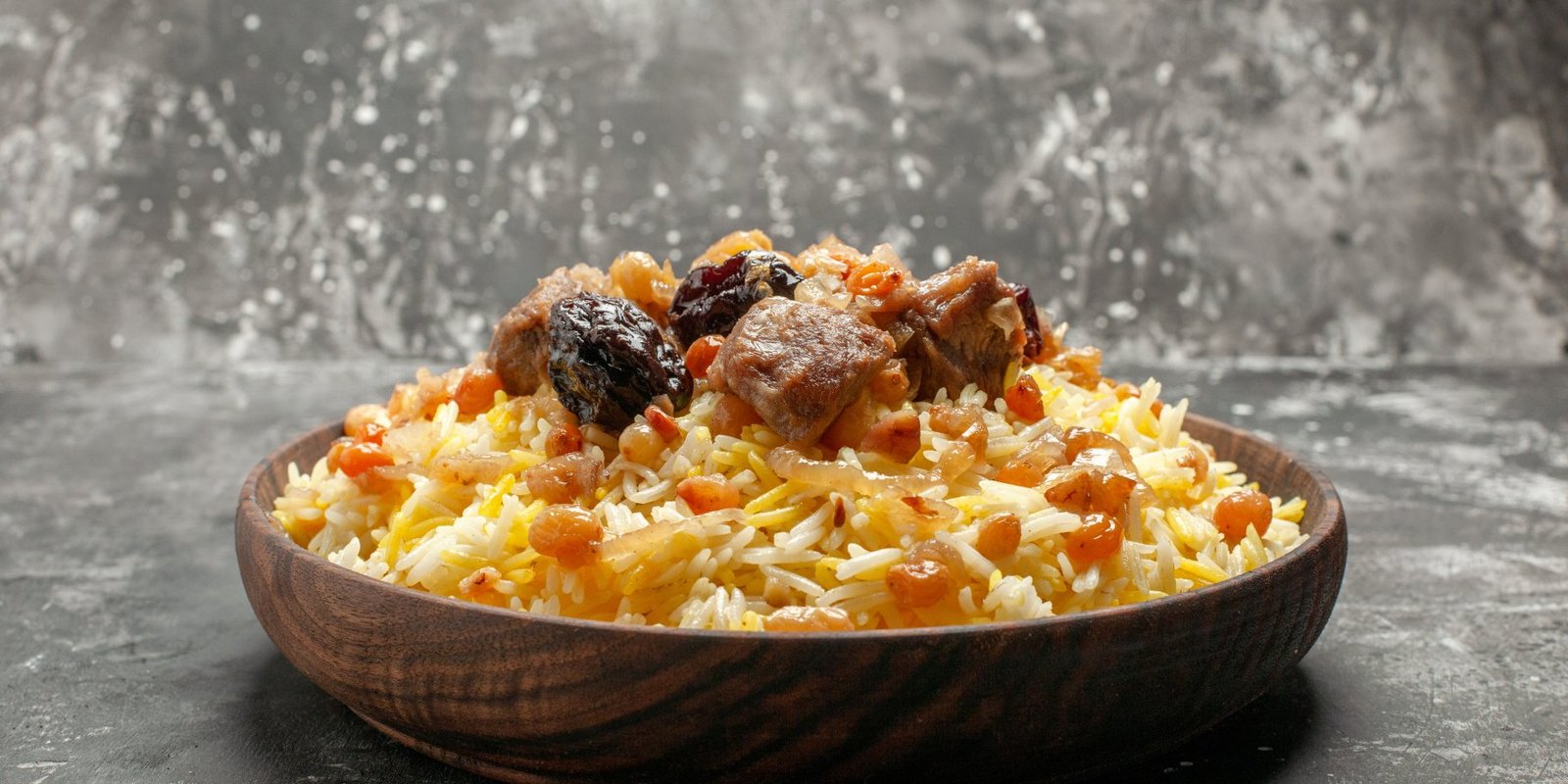
Azerbaijani plov is the pride of the cuisine and a must at any festive lunch. The saffron rice comes out fluffy, golden and delicately scented. The key difference from Uzbek plov is that the rice is boiled separately and the meat is served alongside. This is gara: pieces of lamb or chicken stewed with dried fruit (apricots, prunes, raisins) and chestnuts. The result is gentle and slightly sweet, not greasy or heavily spiced. In Uzbek plov, rice, meat and carrots are cooked together in one cauldron.
There is also a showpiece version in which the rice is baked wrapped in thin lavash. The golden, crisp crust is considered a delicacy. Baku has many varieties of plov: every restaurant and every home cook adds something of their own. Try plov at least once. It is a classic.
Dushbara: tiny dumplings in broth
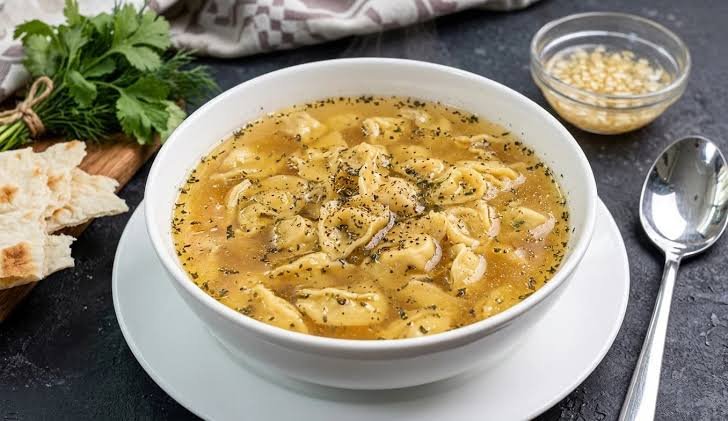
Dushbara are miniature dumplings cooked in fragrant broth. They are so small that they are eaten with a spoon, trying to catch each one whole. The dough is rolled very thin and the filling is minced lamb with onion and spices. To taste, people add dried mint and a little vinegar, sometimes a garlic sauce.
Dushbara is especially popular in cold weather: it warms, fills you up and tastes of home cooking. It is a real gem of Azerbaijani cuisine, and every cook is proud of how small her dumplings come out.
Dolma: grape leaves and vegetables
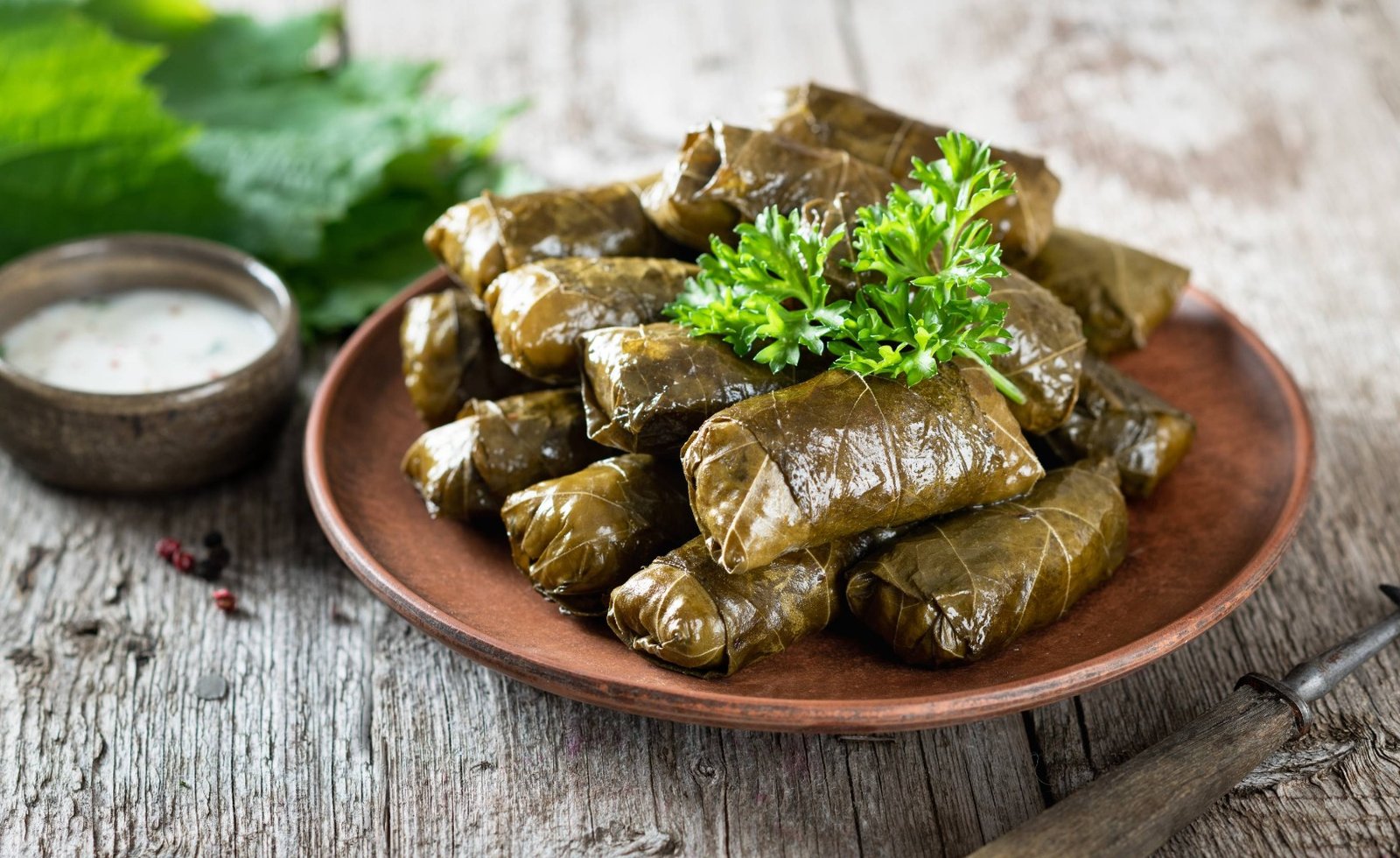
Dolma is loved across the Caucasus, but in Azerbaijan it has its own character. There are two main kinds: wrapped in grape leaves, and vegetable dolma made with peppers, eggplants and tomatoes. The filling is minced meat, rice, plenty of herbs and spices. Every family has its own recipe.
The taste is rich, with a light sourness from the grape leaves and the scent of fresh herbs. Dolma is served as a starter or a main dish, often with yogurt sauce. It is especially good in summer, when vegetables are juicy and herbs are abundant. Vegetable dolma is also a lighter way to try local food.
What else to try at lunch
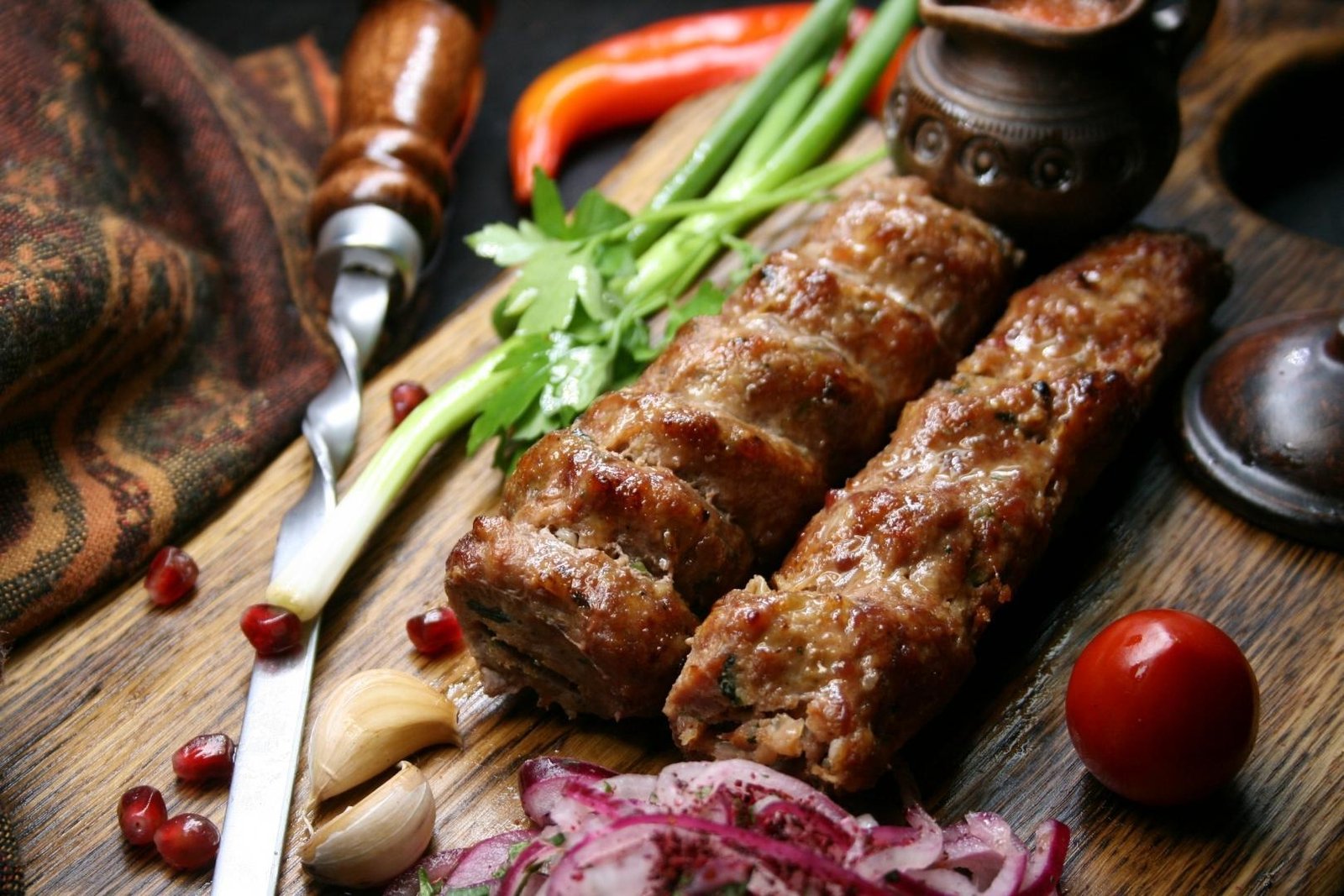
- Lula kebab and other grilled dishes. Minced lamb on a skewer, usually served with lavash, onion and sumac.
- Piti. A thick lamb and chickpea dish slowly cooked in a clay pot. Sheki piti is especially well known.
- Grilled vegetables (eggplant, tomatoes, peppers) as a side or a starter on their own.
Tea and sweets: how lunch ends
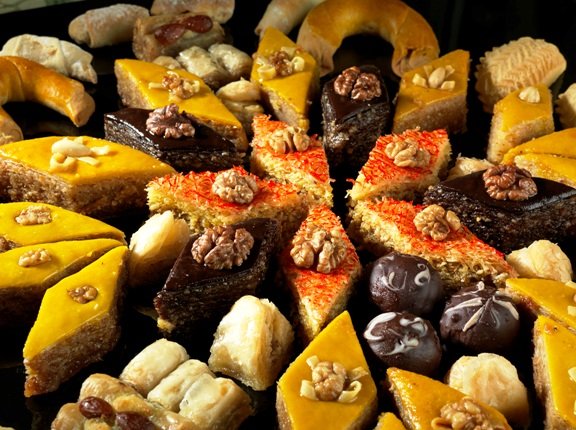
At the end, guests are always brought tea. It is served in glass pear-shaped glasses (armudu) that keep the heat and give the drink a beautiful amber color. Lemon, sugar or jam come with it. Sweets follow: Baku pakhlava with a nut filling, sherbet, other oriental sweets and dried fruit.
Do not rush off after the hot course. Tea is part of the meal, not an afterthought, and the slowest conversations start over it.
Tips for visitors: table manners and etiquette
- Try everything you are offered, even if the dish looks unusual. For your hosts it is a sign of respect.
- Plan at least 90 minutes for lunch and do not hurry the waiter.
- Portions are usually large. In a group, order several dishes and share.
- If you decline a treat, thank your hosts warmly.
- Do not skip the plov. It is a classic.
- Check the bill: a tip of about 10% is common when service is not included.
Where to have lunch in Baku
Baku has many restaurants and cafes where you can try a real Azerbaijani lunch, from cozy family places to stylish restaurants with views of the Caspian Sea. For a first visit, try these areas:
- Old City (Icheri Sheher). Restaurants in historic buildings, courtyards and narrow lanes. Great for an unhurried lunch with atmosphere.
- Fountain Square and Nizami Street. A pedestrian zone with cafes and restaurants at different price levels, easy to combine with a walk.
- Seaside Boulevard. Lunch with a view of the Caspian Sea and a stroll afterwards.
- Taza Bazar. Not a restaurant, but the best place to see local produce, dried fruit, spices and sweets before lunch.
- Traditional tea houses (chayxana). An atmosphere steeped in Eastern culture: tea, plov, light starters and friendly service.
To feel like a real guest of Azerbaijan, step into small cafes that cook homestyle food. A good sign is a place where locals eat lunch. Ask the waiter what came out especially well today and you will almost certainly get a good tip.
FAQ: lunch in Azerbaijan
What do people eat for lunch in Azerbaijan?
First starters: vegetables, herbs, pickles, flatbread, qutab and yogurt. Then a hot dish: plov, dushbara, dolma, kebab or piti. Tea with sweets comes at the end.
How is Azerbaijani plov different from Uzbek plov?
In Azerbaijan the rice is boiled separately, with saffron, and the meat with dried fruit and chestnuts (gara) is served on top or alongside. In Uzbek plov rice, meat and carrots are cooked together in one cauldron.
What should I order in Baku for the first time?
Start with plov, dushbara and dolma, add qutab and finish with tea and pakhlava. Meat lovers should try lula kebab.
Are there vegetarian dishes?
Yes: vegetable dolma, qutab with herbs or pumpkin, salads and grilled vegetables. Plov is often served with the meat gara separately, so you can ask for it without meat. Check with your waiter.
How long does an Azerbaijani lunch last?
Allow at least an hour and a half. Nobody hurries you, and tea is served at the end.
Should I tip?
Usually about 10% of the bill, if service is not already included.
Which sweets are served with tea?
Most often Baku pakhlava with a nut filling, sherbet and jam. The exact selection depends on the place.
Lunch in Baku is not only about food. It is about atmosphere, people and emotions. If you have never tried an Azerbaijani lunch, it is a great time to plan your trip. Explore our guides to Baku, Azerbaijani cuisine and routes across the country.
Comments (0)
Leave a Comment