Azerbaijan holds three UNESCO World Heritage Sites—a relatively small number compared to other countries, but each one represents something truly significant about the nation's history, culture, and geological uniqueness. These sites tell the story of Azerbaijan: its ancient past, its strategic importance on the Silk Road, and its connection to nature.
Whether you're visiting Azerbaijan for the first time or returning for a deeper cultural experience, these three sites deserve your attention. Here's what you need to know about each one.
1. Old City of Baku (Icherisheher) with Shirvanshahs Palace and Maiden Tower
Inscribed: 2000
Location: Heart of Baku, Old City
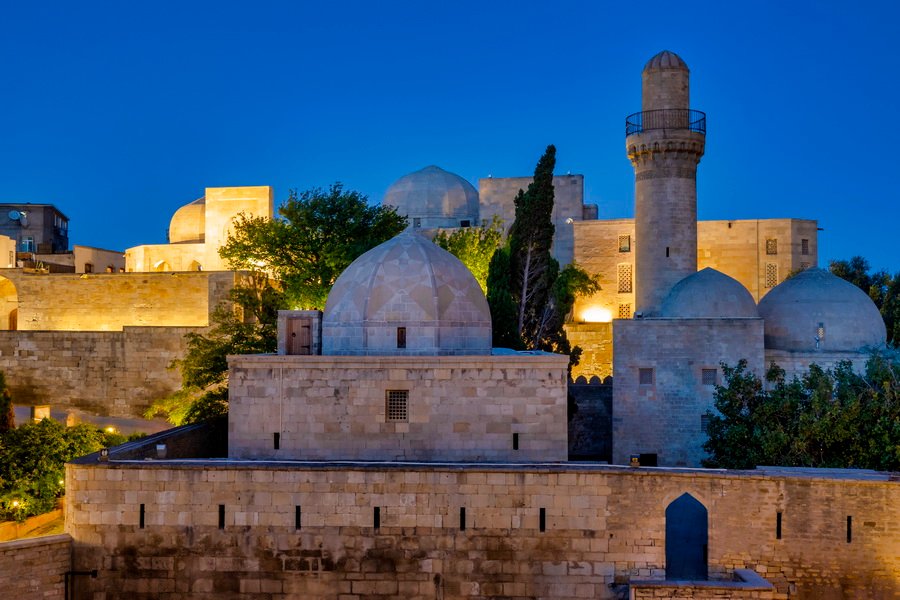
The Old City of Baku, or Icherisheher in Azerbaijani, is a medieval walled city at the heart of modern Baku. Walking through its narrow streets, you step into centuries of history compressed into just a few hundred meters. The Old City contains around 60 historic buildings, with the most prominent being the Shirvanshahs Palace and the iconic Maiden Tower.
Shirvanshahs Palace
The palace is one of Azerbaijan's most magnificent structures, built during the 15th century as the residence of the Shirvanshah dynasty—powerful rulers who controlled the region. The palace complex includes multiple courtyards, residences, pavilions, and the beautiful Divan Hane (audience hall).
What makes the palace special is the blend of Persian and Caucasian architectural styles. Every detail, from the carved stone decorations to the arched doorways, reflects the sophistication of medieval Azerbaijani culture. It's not a palace in the European sense—it's more intimate, more connected to daily life, yet equally impressive.
Maiden Tower (Giz Galasi)
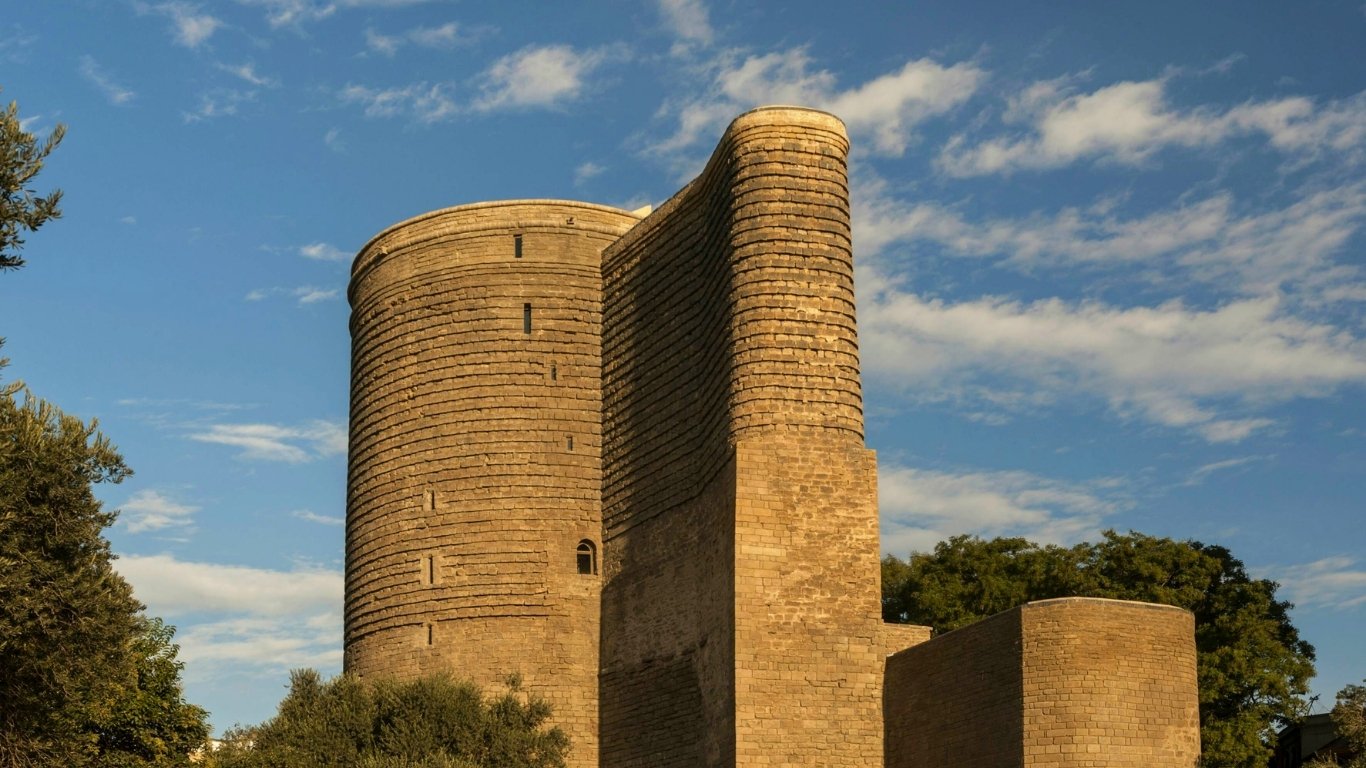
Standing at 28 meters tall, the Maiden Tower dominates the Old City skyline. Its exact purpose remains debated among historians—some believe it was a defensive structure, others think it was part of a fire temple or had other ceremonial functions. What's certain is that it's ancient (likely built between the 5th and 12th centuries) and architecturally unique.
The tower's cylindrical shape and the narrow windows spiraling up its sides create an almost mysterious appearance. Inside, there's a spiral staircase leading to the top, where you get views of the Old City and the Caspian Sea. The views alone justify the climb.
Why It Matters
The Old City represents the continuous habitation of Baku from medieval times to the present. It shows how a city adapted over centuries—remaining relevant, being rebuilt, but never abandoned. For UNESCO, this represents an important example of medieval architecture on the Silk Road.
How to Visit
Entrance fee: 5-10 AZN depending on which monuments you visit
Time needed: 2-3 hours minimum
Best time: Early morning or late afternoon to avoid crowds and heat
Getting there: The Old City is in central Baku, easily accessible by metro or taxi
Route from Baku Hotels to Old City:
If staying in central Baku (Nizami Street area): 5-10 minute walk
By Metro: Take any line to "Icherisheher" station (closest to Old City)
By Taxi: Tell driver "Icherisheher" or "Old City"—should cost 3-5 AZN
Tip: Hire a local guide if you want deeper historical information. The stories make the stones come alive.
2. Gobustan National Park (Rock Art, Petroglyphs & Mud Volcanoes)
Inscribed: 2007
Location: 60 km southwest of Baku
Gobustan is fundamentally different from the Old City. While Baku's heritage is about human civilization and architecture, Gobustan is about both ancient human culture and geological nature combined in one place.
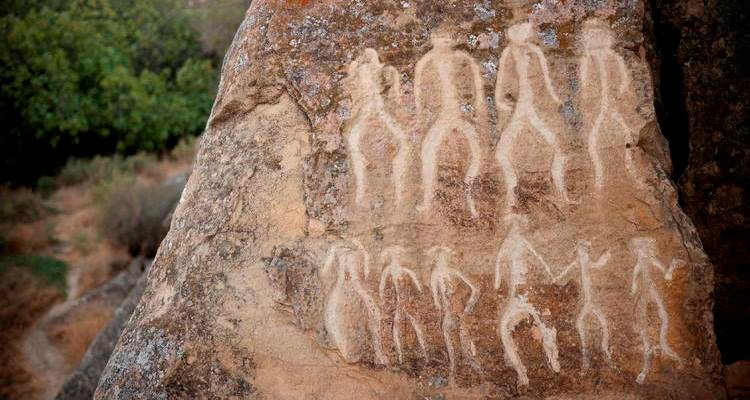
The park contains over 1,500 petroglyphs (rock carvings) dating back to the Mesolithic period (10,000-5,000 BCE), making them among the oldest art in the Caucasus. Alongside these ancient carvings sit active mud volcanoes—geological formations that continuously bubble and emit gas from deep underground.
The Petroglyphs
These carvings were created by hunter-gatherers and early herders who lived in the Caucasus. The images show hunting scenes with bows and arrows, boats and ships, human figures, and animals like horses, deer, and wild boar.
What strikes visitors is how vivid and expressive these images are—despite being thousands of years old, they communicate emotion and movement. You can almost see the ancient artist's hand. The hunting scenes convey action and tension. The boats suggest trade and travel. These aren't crude marks; they're deliberate, meaningful art.
The most famous petroglyphs are on the main plateau, where you can walk among the rocks and examine individual carvings. Many have been preserved remarkably well.
The Mud Volcanoes
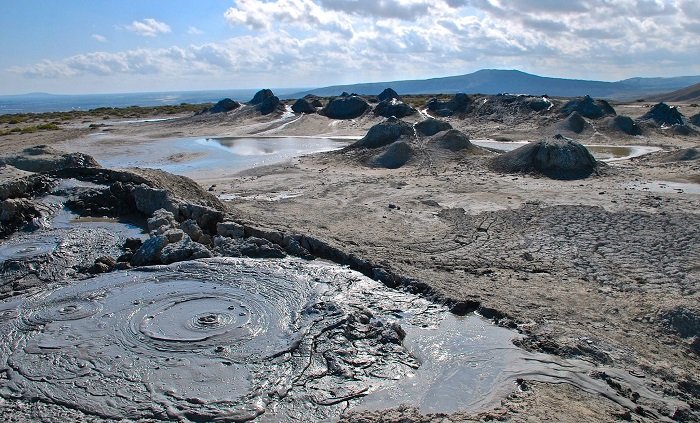
Gobustan has several active mud volcanoes—the largest being quite impressive. Unlike traditional volcanoes, these emit mud and gas rather than lava. If you visit in the right season (spring and early summer), you'll see the mud slowly bubbling and oozing, sometimes making popping sounds as gas escapes.
It's a surreal experience: standing on dry, barren earth and watching it literally gurgle. The landscape around the mud volcanoes is otherworldly—sparse vegetation, grey and brown earth, and the constant gentle movement of the ground.
Why It Matters
UNESCO recognized Gobustan for its outstanding universal value: it represents a crucial link between art history and natural geology. The site shows continuous habitation and cultural development over 10,000 years in one location. Combined with the mud volcanoes, it's one of the most unique cultural-geological sites in the world.
How to Visit
Entrance fee: 10 AZN
Time needed: 3-4 hours for a good experience
Best time: April-May and September-October (pleasant weather, good visibility)
Getting there: By organized tour from Baku (most common), or by rental car
Route from Baku to Gobustan National Park:
Distance: 60 km
Driving time: 1.5-2 hours depending on traffic
Route: Head southwest from Baku toward Shamakhi road, follow signs to Gobustan National Park
By organized tour: Hotels and tour operators in central Baku offer daily tours (departing 8-9 AM, returning 4-5 PM). Cost: $40-70 per person
By taxi: Request a round trip with waiting time—expect to pay 80-120 AZN for the whole excursion
By rental car: Pick up from Baku, drive via Shamakhi highway, plenty of parking at the park entrance
Tip: Wear comfortable shoes with good grip—the rocks can be uneven. Bring water and sun protection.
3. Lahij: Cultural Landscape of a Traditional Craft Community
Location: Ismailly District, Caucasus Mountains (130 km from Baku)
Lahij is a small mountainous village that exists in a different world from Baku. UNESCO recognizes it not as a single monument but as an entire cultural landscape—a place where traditional coppercraft has been practiced continuously for centuries and shapes every aspect of community life.
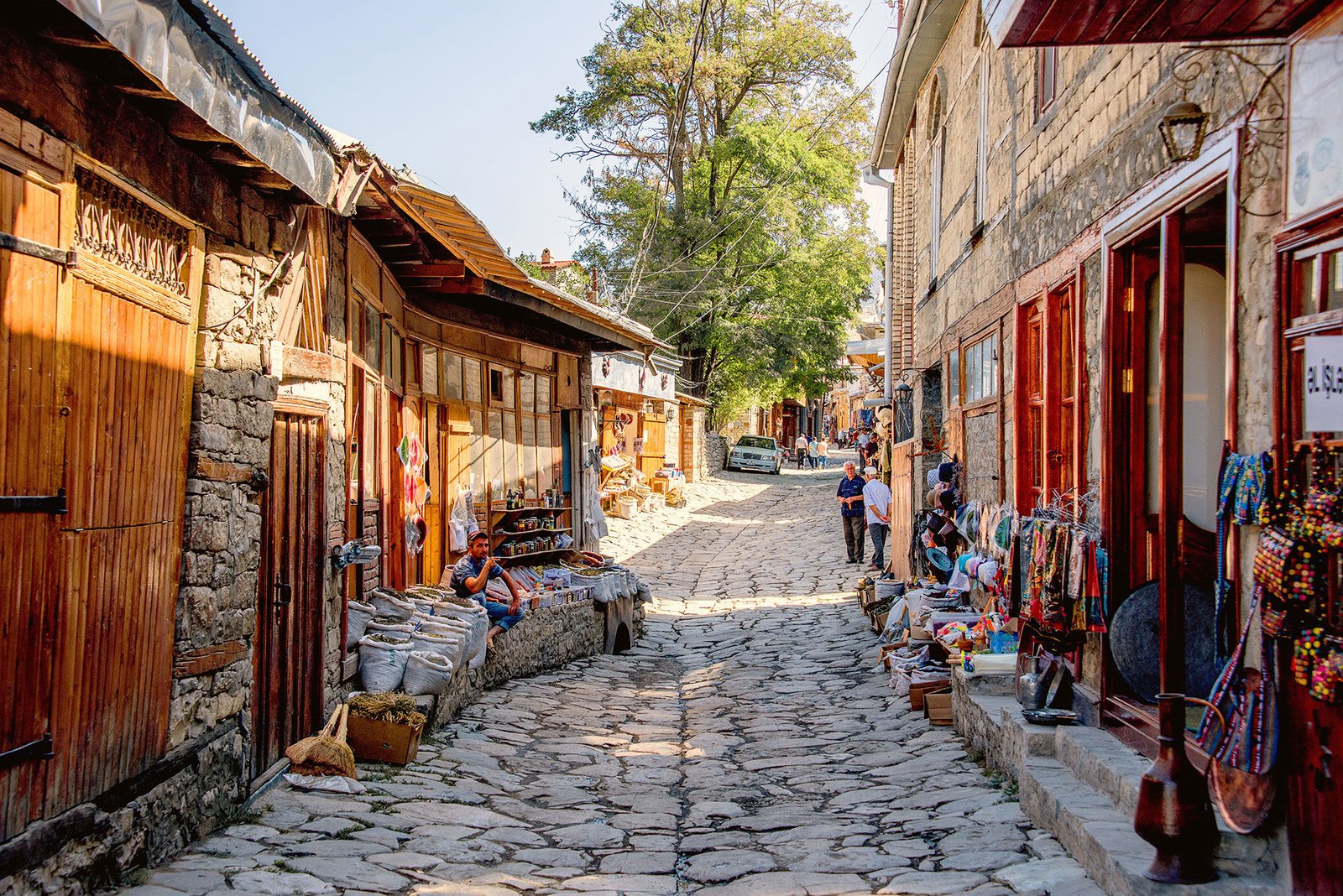
The village sits in a narrow gorge on the slopes of the Caucasus. Houses are built vertically up the mountainside, connected by narrow winding streets and stone staircases. A river runs through the center, and the sound of hammering copper echoes through the village—locals have been working copper in the same way for generations.
The Coppercraft Tradition
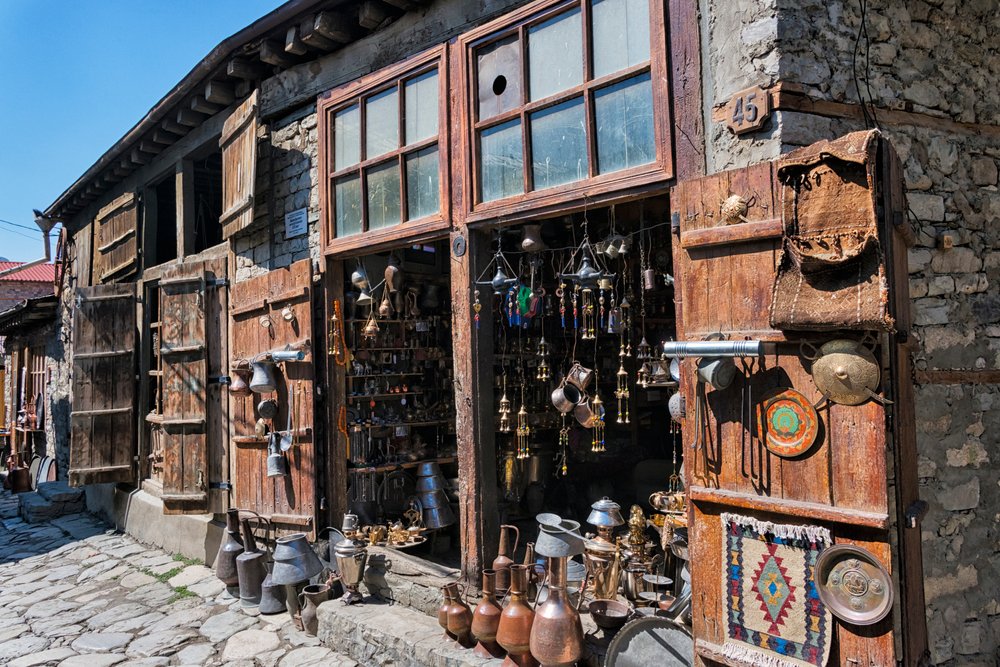
Lahij is known throughout the Caucasus for copper work. Walk through the village and you'll see copper workshops on nearly every street—small family businesses where artisans hammer, shape, and engrave copper into plates, bowls, pitchers, trays, and decorative items. Each piece is handmade, and the quality ranges from simple functional ware to elaborate decorative art.
What's remarkable is that this isn't a craft that exists in museums or historical records only—it's living. Young people still learn the trade from their parents and grandparents. The techniques have been passed down so consistently that someone making copper in Lahij today is using methods nearly identical to those used 500 years ago.
The Landscape and Community
The village itself is part of the heritage. The traditional architecture, the organization of the community, the integration of craft workshops into daily life—all of this is preserved. UNESCO recognized that destroying or significantly altering Lahij would destroy the very thing that makes it valuable.
Visiting Lahij means walking narrow streets, watching artisans work, hearing the constant rhythm of hammering, smelling the metalwork, and experiencing a community that has maintained its identity against modern pressures.
Why It Matters
In an age of industrial mass production and cultural homogenization, Lahij represents something increasingly rare: a living traditional craft community that hasn't been abandoned or turned into a museum. The people still live there, still practice their crafts, still pass knowledge to the next generation. UNESCO recognized this as an outstanding example of how traditional skills and landscapes can be preserved through active, continuous practice rather than through preservation in amber.
How to Visit
Entrance: No formal entrance fee, but it's respectful to buy something from local artisans
Time needed: 4-6 hours minimum; many visitors spend the day or overnight
Best time: May-September (mountain weather is more stable)
Where to stay: Small guesthouses in the village; book ahead
Route from Baku to Lahij:
Distance: 130 km
Driving time: 2.5-3 hours depending on mountain roads
Google Maps: Baku to Lahij
Route: Head west through Ismailly district, then follow signs to Lahij village in the Caucasus mountains
By organized tour: Several tour operators offer 1-2 day trips to Lahij. Cost: $60-100 per person. Some tours combine Lahij with Ismailly or other mountain attractions
By taxi: Not recommended as a round trip (too far and expensive—200+ AZN). Better to arrange pickup/dropoff or hire a driver for the day
By rental car: Best option for flexibility. The mountain road is winding but well-maintained. Allow 3 hours driving time
Guesthouses: Lahij has family-run guesthouses offering meals and accommodation ($20-40 per night). Book in advance through tour operators or directly with proprietors
Tip: Visit the workshops and talk to the artisans. They're usually happy to explain their work. The experience is much more valuable than just buying souvenirs.
How to See All Three
If you have 5-7 days in Azerbaijan:
Day 1-2: Old Baku. Spend time in the Old City, climb the Maiden Tower, explore the palace. Get a local guide for deeper context.
Day 3: Gobustan. Full-day excursion from Baku (organized tours leave early morning).
Day 4-5: Lahij. This requires more time because of the drive and the need to actually experience the village. Consider staying overnight.
If you have 2-3 days:
Prioritize Old Baku and either Gobustan or Lahij. Old Baku is non-negotiable if you're in Baku. Gobustan is easier to fit into a day trip. Lahij requires more commitment but offers the most authentic, less-touristy experience.
Why These Sites Matter
These three UNESCO sites tell Azerbaijan's story:
Old Baku shows the country's role in medieval trade and urban development
Gobustan reveals its ancient roots and connection to the land
Lahij represents its living cultural traditions and craftmanship
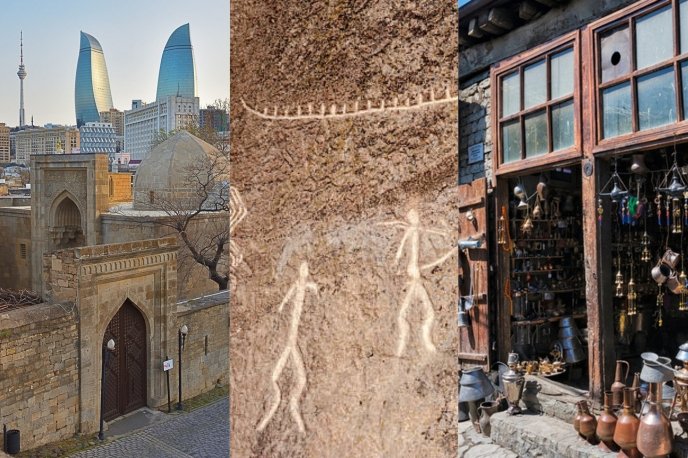
Together, they present a multi-layered picture of a country that bridges Europe and Asia, that has deep ancient roots, and that continues to maintain its cultural identity in the modern world.
Visit them with the understanding that you're not just seeing tourist attractions—you're witnessing places that UNESCO deemed important enough to preserve for all of humanity.
Comments (0)
Leave a Comment